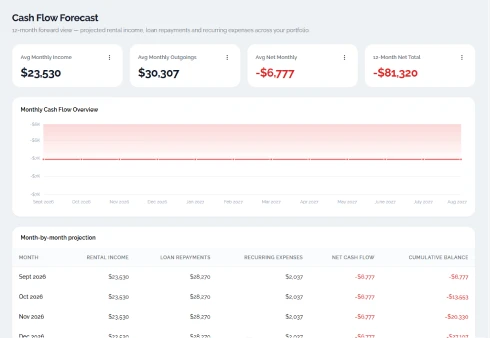
Cash flow is the money left over, or the shortfall, after a property’s income and costs are taken into account. It decides how comfortably you can hold a property and whether you can afford the next one. Here is how to work it out.
Annual cash flow = rental income − (loan repayments + ongoing expenses)
If the result is positive, the property puts money in your pocket. If it is negative, you need to top it up from other income.
Rent: $580 per week × 50 weeks (allowing 2 vacant weeks) = $29,000.
Interest-only repayments: $26,000. Other expenses: $8,500.
Cash flow = $29,000 − ($26,000 + $8,500) = −$5,500 a year, or about −$106 a week before any tax effects.
The example above is pre-tax. After-tax cash flow also considers deductions such as depreciation and the tax effect of any net rental loss. That depends on your personal situation, so it is worth reviewing with your accountant.
One property with a small shortfall may be fine. Several negative properties together can stretch your budget, especially when interest rates move. Tracking cash flow at portfolio level shows the full picture.
Property Folio AI tracks rent, repayments and expenses for every property and shows your portfolio cash flow, so you always know where you stand.
Start your 30-day free trialOne where rental income is higher than all holding costs, including loan repayments, so it produces a surplus.
Yes, for cash flow. Principal is cash leaving your account even though it builds equity rather than being an expense.
Higher rates increase repayments, which reduces cash flow. Even a small rise can matter across several properties.
This article is general information only and is not financial, tax or legal advice. Consider speaking with a licensed professional about your circumstances.