Rental yield is one of the quickest ways to compare investment properties. It tells you how much income a property produces each year compared with what it is worth or what you paid for it. Here is how to calculate both gross and net rental yield, and how to use the numbers sensibly.
Rental yield is the annual rent a property earns, shown as a percentage of the property value. A higher yield means more income for every dollar invested, while a lower yield usually means you are relying more on capital growth.
Gross yield uses rent only, before any costs:
Gross rental yield = (weekly rent × 52) ÷ property value × 100
Example: a property worth $650,000 rented at $600 per week earns $31,200 a year. $31,200 ÷ $650,000 × 100 = 4.8% gross yield.
Net yield is more realistic because it subtracts the costs of owning the property:
Net rental yield = (annual rent − annual expenses) ÷ property value × 100
Using the same property, if yearly expenses come to $9,000, the net income is $22,200. $22,200 ÷ $650,000 × 100 = 3.4% net yield.
Loan interest is usually left out of net yield so you can compare properties regardless of how they are financed. Include it separately when you work out cash flow.
There is no single “good” number. Yields vary by city, suburb and property type. Units and regional properties often show higher yields, while houses in capital cities often have lower yields but may offer stronger long-term growth. Compare a property with similar properties in the same area, and look at yield together with growth prospects, vacancy rates and your own cash flow needs.
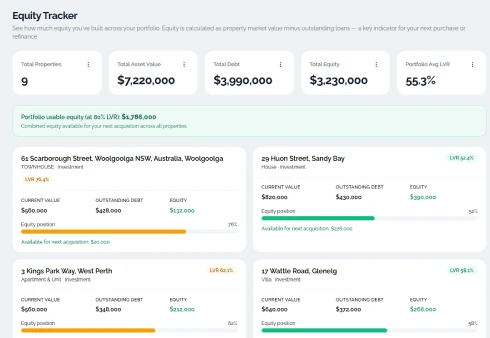
When you own more than one property, looking at yield property by property quickly shows which assets are pulling their weight. Rents, values and expenses change over time, so yield is worth reviewing at least once a year.
Add your rent and expenses once and Property Folio AI shows the income and performance of every property in your portfolio, side by side.
Start your 30-day free trialGross yield uses rent only. Net yield subtracts ownership costs such as rates, insurance, management fees and maintenance, so it gives a more realistic picture of income.
Use current value to compare investments today. Use purchase price to see the return on what you originally paid.
Usually not. Interest is left out so properties can be compared regardless of financing. Include interest when you calculate cash flow.
This article is general information only and is not financial, tax or legal advice. Consider speaking with a licensed professional about your circumstances.